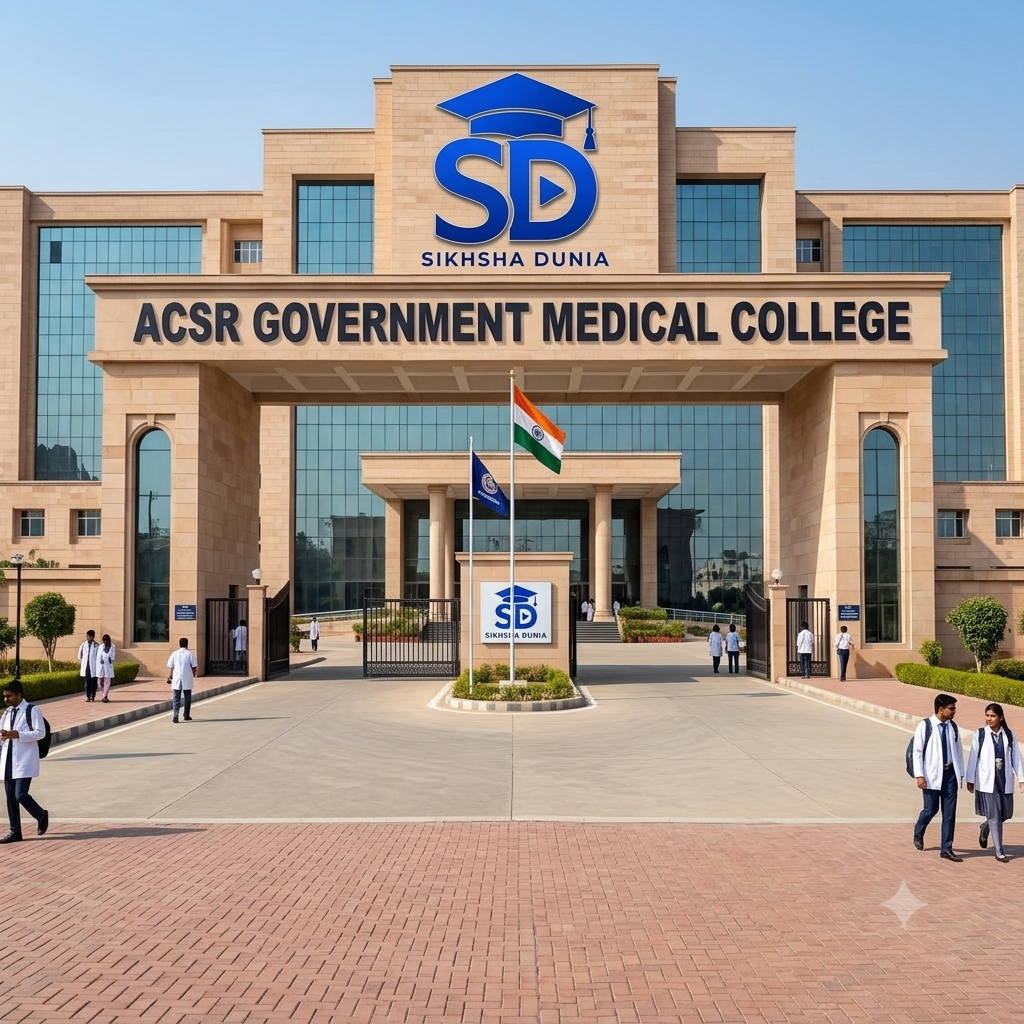
ACSR GOVERNMENT MEDICAL COLLEGE
Established
2014
Location Type
Rural
College Type
Affiliated College
Management
State Government
Affiliation
Ye college Dr. N.T.R. University of Health Sciences, Vijaywada se affiliated hai (State Public University).
Is College Ke Baare Mein
ACSR GOVERNMENT MEDICAL COLLEGE – Courses, Facilities and Admission
About Us
A.C.S.R. Government Medical College, also known as A.C. Subba Reddy Government Medical College, is a government medical institution located in Nellore, Andhra Pradesh. The college was established in 2014 with the aim of providing quality medical education and developing skilled healthcare professionals.
The institution focuses on combining academic learning with practical clinical experience. Its teaching environment helps students understand medical concepts, develop clinical skills and gain exposure to patient care. The college is associated with Dr. NTR University of Health Sciences and serves as an important centre for medical education and healthcare services in the region.
With its academic departments, teaching facilities and hospital-based training, ACSR Government Medical College provides students with opportunities to build a strong foundation for a career in medicine.
History
ACSR Government Medical College was established in 2014 to strengthen medical education and healthcare services in Nellore and nearby areas. The college is named after Anam Chenchu Subba Reddy, whose name is associated with the institution.
The college has an important connection with the Government General Hospital in Nellore, which has served the healthcare needs of the region for several decades. The hospital's history dates back to the 1960s and has contributed to the development of medical services in the area.
Over the years, the institution has continued to support medical education, clinical training and patient care. Its association with a teaching hospital allows students to connect classroom knowledge with real-life medical practice.
Courses
ACSR Government Medical College offers medical education and training opportunities for students interested in building a career in healthcare. The courses are designed to develop theoretical knowledge, practical skills and professional competence.
The major courses and programmes associated with the institution include:
1. MBBS (Bachelor of Medicine and Bachelor of Surgery)
The MBBS programme provides students with a comprehensive understanding of medical science, human anatomy, physiology, diseases, diagnosis and treatment. Students receive academic instruction along with clinical exposure to help them develop the skills required to become medical professionals.
2. MD and MS Programmes
Postgraduate medical programmes provide opportunities for students who wish to specialise in different branches of medicine. Specialities associated with the institution include General Medicine, Paediatrics, Anaesthesiology, Anatomy, Community Medicine, Psychiatry, General Surgery, Orthopaedics, Ophthalmology, and Obstetrics and Gynaecology. Course availability and approved intake may vary.
3. Paramedical Courses
Paramedical education supports the development of skilled healthcare professionals who assist doctors and other medical staff in hospitals and diagnostic centres. Diploma-level programmes may be available depending on the institution's current admission notifications and approved courses.
Students should check the latest official college notifications for updated course details, eligibility requirements and seat availability.
Facilities
ACSR Government Medical College provides academic and clinical learning facilities to support students throughout their medical education. The campus and associated teaching hospital contribute to an environment where students can develop both theoretical understanding and practical experience.
Some of the important facilities and learning resources include:
1. Academic Infrastructure
The college provides classrooms and teaching spaces that support lectures, discussions and academic activities. These facilities help students understand medical subjects and prepare for examinations and professional responsibilities.
2. Teaching Hospital
The associated Government General Hospital provides an important setting for clinical learning. Students can gain exposure to patient care, medical examinations, diagnosis and treatment procedures under the guidance of qualified healthcare professionals.
3. Medical Departments
Different medical departments support academic instruction and clinical training across various specialities. This exposure helps students understand different branches of medicine and explore their areas of professional interest.
4. Diagnostic Facilities
Hospital-based diagnostic services, including imaging and other investigation facilities, support patient care and clinical learning. Facilities may include X-ray, ultrasound, Doppler, CT and MRI services, subject to current availability.
5. Practical and Clinical Training
Medical education involves more than classroom learning. Clinical postings, practical sessions and hospital exposure help students develop observation, communication and patient-care skills.
6. Student Accommodation
Hostel-related facilities and arrangements may be available for eligible students. Students should confirm the latest accommodation details, availability and rules directly through the college administration.
Placement and Career Opportunities
A medical degree from ACSR Government Medical College can open doors to several career opportunities in the healthcare sector. Medical education equips students with the knowledge and practical skills needed to work in hospitals, healthcare institutions and other medical settings.
After completing MBBS and fulfilling the applicable internship and registration requirements, graduates can explore opportunities such as:
- Working as a medical officer in government or private healthcare institutions.
- Joining hospitals and clinics as a medical practitioner.
- Preparing for postgraduate medical education through NEET PG.
- Exploring opportunities in public health and community healthcare.
- Pursuing careers in medical research and healthcare-related organisations.
Students who complete postgraduate MD or MS programmes can develop expertise in their chosen medical speciality and explore specialist roles in hospitals and healthcare institutions.
Career opportunities depend on qualifications, registration, experience, recruitment requirements and individual performance. The college's medical training and clinical exposure can help students prepare for their future professional responsibilities.
Admission Process
Admission to ACSR Government Medical College is generally conducted according to the eligibility criteria and counselling procedures prescribed by the relevant medical authorities and government regulations.
For MBBS Admission
Students seeking admission to the MBBS programme must qualify for the NEET UG examination. Eligible candidates need to participate in the applicable counselling process and complete the admission formalities according to the allotted seat and category requirements.
For MD/MS Admission
Candidates interested in postgraduate medical courses must qualify for NEET PG and participate in the prescribed counselling process. Admission depends on eligibility, merit, seat availability and applicable reservation rules.
Documents Required
Students may be required to submit the following documents during admission:
- NEET UG or NEET PG scorecard, as applicable.
- Class 10 and Class 12 mark sheets and certificates.
- Transfer certificate.
- Migration certificate, if applicable.
- Identity proof.
- Passport-size photographs.
- Category certificate, if applicable.
- Other documents required by the counselling authority.
Applicants should carefully review the latest admission guidelines and official notifications before applying, as eligibility conditions, counselling schedules and document requirements may change.
Why Choose ACSR Government Medical College?
Choosing the right medical college is an important decision for students planning a career in healthcare. ACSR Government Medical College offers an academic and clinical learning environment for students who want to develop their medical knowledge and professional skills.
Some reasons students may consider this institution include:
- Government Medical Institution: The college provides an opportunity to pursue medical education within a government institution.
- Medical Education: Its academic programmes support students in developing a foundation in medical science and healthcare.
- Clinical Exposure: Association with a teaching hospital gives students opportunities to observe and understand real-world medical practice.
- Multiple Specialities: Exposure to different medical departments helps students explore various branches of healthcare.
- Practical Learning: Clinical postings and practical activities help students connect theoretical concepts with patient care.
- Career Development: Medical education provides a pathway towards postgraduate studies and different professional opportunities in the healthcare sector.
Conclusion
ACSR Government Medical College, Nellore, plays an important role in medical education and healthcare development in Andhra Pradesh. With its MBBS programme, postgraduate medical education, academic departments and association with a teaching hospital, the institution provides students with opportunities to develop the knowledge and practical skills required in the medical profession.
For students looking for a government medical college in Andhra Pradesh, ACSR Government Medical College is an institution worth exploring. Before applying, candidates should review the latest information about courses, eligibility, admission procedures, facilities and seat availability through the official college website.